digital knowledge. digital culture. digital memory.

Showing posts with label coup. Show all posts

21.11.07

RIP HnC: another renegade blog bites the dust


New to this blog? Why not subscribe to its feed or sign up for free email updates?

sour tears by a shot in the dark
Another notorious anti-interim government blog goes offline. Hyde and Seek, which went live in May of 2007, seems to have taken itself offline within the last several hours after around 400 posts and thousands of comments.
Wordpress blog deletedAs with the death of WFC, rumors abound about whether or not the bloggers took the site down willingly or unwillingly. If you want to see how the site looked in June and July of 2007, there are three pages captured by the Internet Archive's Way Back Machine.

No doubt, a blog or two will take hnc's place.

Photo by: a shot in the dark

Blogged with Flock

7.9.07

Is blogging a dead issue in Fiji?


New to this blog? Why not subscribe to its feed or sign up for free email updates?


I have had a lot of fun blogging about blogging in Fiji. (You can relive all dfiji blog blogging here!) It is fascinating for me to see the interplay of blogs, Fiji's military, and the anti-interim-government movement. Now that we have returned to martial law for the second time this year, I am wondering if blogs will re-emerge as a major political issue?

  • Will any "big name" renegade bloggers get caught?
  • Will the anti-military blogs return to inciting violence?
  • Will the truly pro-democracy anonymous bloggers denounce their anti-democratic anonymous compatriots, or will they remain united against a common foe?
  • Will the government actively block any blogs?
  • Will opposition to the interim government take root in other online forums such as Facebook or Hi5?
It will be interesting to see what transpires - in between watching rugby matches, of course.
Photo by: Elena!

10.7.07

Infamous Fiji blog hits Wordpress top 100 list


New to this blog? Why not subscribe to its feed or sign up for free email updates?

Most of the world's bloggers are typing away in relative obscurity having very few readers beyond a few family and friends. Most of Fiji's bloggers are no different drawing only single digit readerships daily. I have been grinding away at Digital Fiji for roughly a year now and I can only boast of a daily readership of around 40 unique readers daily with occasional spikes to over 100 whenever I write something reasonably interesting.

It will not surprise anyone that Fiji's anonymous political blogs, which exploded onto Fiji's blogosphere shortly after the 2006 coup, draw much more of an audience than Digital Fiji. However, who would of thought that one of Fiji's most controversial anti-military blogs would rate among the "top blogs" of the world? Why Fiji Is Crying, which I recently blogged about, has done just that.


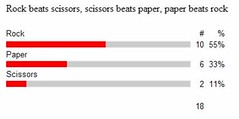
This screen shot is taken from the Wordpress Top Blogs page today. You can see Why Fiji Is Crying sandwiched between YOU BEEN BLINDED and Tennis Planet. What does this mean? It is hard to say. Wordpress's page says that they top blogs are "ranked here according to a special formula". The formula is not revealed.

This certainly demonstrates that Fiji's anonymous political blogs, with all of the questions that they raise, are extremely popular - in fact, Why Fiji Is Crying is likely the most popular blog in Fiji.

P.S.: If you are interested in trying to draw more readers to your own blog, check out Matt Huggins' 55 Essential Articles Every Serious Blogger Should Read. Keep blogging!

22.6.07

Blogs, the laws of the USA, and why Fiji is really crying


New to this blog? Why not subscribe to its feed or sign up for free email updates?


The New Zealand press

In my June 19, 2007 post, I quietly mentioned the unreported story of an alarming change in the rhetoric of Fiji's anti-military blogs from defamatory to violent. As of today, the New Zealand press is starting to pick up on this. Michael Field, who was recently ejected from Fiji, penned a story appearing on Stuff this morning. Here is an excerpt:

A Fiji internet blog has called for attacks on tourists and has provided recipes for making Molotov cocktails and bombs. Fiji's military, which staged a coup in December, has been trying to close down blogs but one of the oldest, Why Fiji's Crying (WFC), has survived and in its latest set of postings calls for guerrilla war.Following the expulsion of New Zealand High Commissioner Michael Green last week, WFC has published an appeal to Fijians to destabilise the country by striking at weak points...
[Blog calls for attacks on tourists in Fiji, Stuff, June 22, 2007]
In a similar piece, the tvnz.co.nz site references the same post from WFC.
A Fijian blog is calling for attacks on tourists to the island nation. The author says driving tourists away would cut revenue flowing to the Bainimarama regime. The website suggests targets like tour buses and resorts. The blogger says Fiji is already economically unstable and wiping out the country's main industry will be the final nail in the regime's coffin.
[Fiji blog calls for tourist attacks, tvnz.co.fj, June 22, 2007]
Why is Fiji crying?

So that you are free to draw your own conclusions, here is an excerpt from the WFC post that has prompted most of this discussion.
Strike at your enemies weak points. The most obvious weak point of the regime, its jugular, is its inability to protect its outer networks and the failing economy.

Tourists are still coming to Fiji, think of how you can stop that. What assets can you focus on within the tourist industry that will send the message back to their home countries that Fiji is not a safe destination at the moment ? Tourist tour busses ? Tourist Bure’s ?

If you want to make Molotov cocktails, think about how you will access the fuel and the motor oil without attracting suspicions. Think about a safe location where you can prepare your materials and keep them hidden. Do not keep the materials at the house of any of your members. Keep them at a safe hideout. A hidesite away from any of your homes. You can also keep all your plans and documents at that site. It is a safe point where all your materials are safely stored away so that no one can link you back to the materials. When you need to go on the operation you can then go and pick up from the hidesite and move out.

Try to operate in two teams. One team as your strike team and the other as your "overwatch". That means you can split your force into two teams on operations. One team is to provide route security to ensure that your intended escape route is safe and the other team is to do the attack.
[Fijians - destablise the country, WFC, June 19, 2007]
The very next post qualifies this tactical advice with the statement, "have some faith and patience, and remember that physical resistance is the last option - not the first." For me, this call for patience does little to warm the chill left by images of fire-bombed buses.

Even more disturbing is the juxtaposition of this call to arms with the fanning of the decades-old flame of racial hatred in Fiji in another June 19, 2007 post at WFC.
(Chaudhary) by his 5/12 coup, was really hoping that Fiji will be his, under his control, a place he would like Fijians and the rest of the world to know as “little India”, the Fijian Island paradise lost to the hands of a man who is living out his whole life to “Indianize” Fiji.
[Mahen Chaudhary angered by Frank, WFC, June 19, 2007]
The result of these posts on WFC is a heady mix of uttering threats, inciting violence against innocent civilians, hate crime, and quite frankly, terrorism. Based on the WFC's stated goal of destabilizing the economy by driving tourists away, the authors of these posts may actually have no intention of having anyone carrying out these acts - the threat is sufficient. However, the fact remains that the act of publishing these posts violates several criminal laws in many countries around the world, including the United States.

The laws of the USA

Why are the laws of the USA significant to Fiji bloggers? Why not talk about the laws of New Zealand, Australia, or at least those of Fiji? The answer is simple. Because San Francisco based Wordpress and San Jose based Google (the owner of Blogger and blogspot.com) are American companies. "So?", you ask. Well, when you violate American criminal law on a server on American soil, you may get the attention of American law enforcement.

More to the point for those of you attempting to preserve your online anonymity, WFC has given US law enforcement a powerful motive to cooperate with the Fijian law enforcement. It is also important to note that US law enforcement agencies gain far-reaching evidence gathering powers when a criminal investigation is connected with terrorism. This is due to a piece of legislation known as the Patriot Act, which empowers US federal law enforcement to gain access to all records held by Wordpress, Google, and other American online services for any suspects or their alleged associates. This includes their gmail, yahoo, and msn email accounts and all information connected with those accounts.

Does this all sound a little far fetched?

Google does it in India.
Think twice before you let loose your thoughts on Orkut. The Google-run community site, which has become a global platform for sharing personal information, ideas and sentiments and already has nearly 6.6 million registered Indian users (of a total of 49 million worldwide), has entered into a pact with the Cyber Crime Cell of Mumbai police saying it will not only block those 'forums' and 'communities' that contain 'defamatory or inflammatory content' but also provide the IP addresses from which such content has been generated...

"Now we can do away with the process and not just directly ban content but also obtain details of IP addresses and service providers quickly"
[Orkut's tell-all pact with cops, Economic Times, May, 2007]
Yahoo does it in China.
Yu Ling, the wife of imprisoned Chinese dissident Wang Xiazoning, has sued Yahoo for divulging information about her husband's Internet activity, which allegedly led to his arrest and torture.
[Yahoo sued over jailing of Chinese dissedent, CIO, April 19, 2007]
Why wouldn't it happen with Wordpress and Google in Fiji?


p.s. American contract law: Recent content posted to WFC and a few other anti-military blogs in Fiji may violate of both Wordpress' and blogspot.com's terms of service (Wordpress tos, blogspot tos). Wordpress and Google reserve the right to terminate your blog for very little reason if they see fit to do so.

Photos by: carf, MISz "H"

14.5.07

Blocking anti-military blogs may harm military


New to this blog? Why not subscribe to its feed or sign up for free email updates?


There have been numerous reports in both the Fijian and international press over the past few of days about the interim government working with FINTEL to censor troublesome blogs. I think that this would be a mistake. In fact, blocking these blogs may actually harm the interim government.

Here are four reasons why Fiji's interim government should reconsider asking FINTEL to block access to anonymous anti-military blogs:

1. Clearly, some of the remarks in Fiji's anonymous political blogs regarding members of the interim government are libelous. Fiji's Defamation Act and supporting Common Law allows for an injured party to ask the court to instruct an Internet Service Provider to turn over records relating to a customer who has published defamatory remarks. No additional legislation or special measures are required. However, some anonymous bloggers cover their tracks and will not be caught by this method.

2. The perception of government tampering in FINTEL, Fiji's pivotal Internet Service Provider through which all Internet traffic flows, would dampen high-tech investment in Fiji. Off-shore service centres rely on the perception of data communications security in order to assure their customers that the confidentiality of their data will not be compromised.

3. Information warfare theory shows that censoring blogs may cost the interim government more than it gains. Power is the ability of a combatant to take an action and have it result in a desired effect. In information warfare, where the weapons are ideas and the battlefields are people's minds, cultures, and ways of life, the power of a combatant is limited by the combatant's perceived legitimacy. Every action that can be perceived as taking the interim government one step further from a return to democracy is going harm the government's perceived legitimacy in the eyes of major international stakeholders - the EU comes to mind here - and in the eyes of at least some proportion of the population of Fiji. This reduced perception of legitimacy then constrains the interim government's future efforts to exercise their power. In an information war, which is certainly what Fiji is currently experiencing, combatants must carefully weigh the consequences of any action before executing it as one's own actions can be more damaging than an enemy attack.

Figure 1.
Any action that weakens Fiji's interim government's perceived legitimacy weakens its power to act.
[diagram from K A Taipale, 2006.]


4. Most importantly, blocking blogspot.com or a hand full of offending blogspot sites will not be effective. Anonymous political bloggers and their readers will simply shift their activities to other available Internet resources, such as:
  • A new blog on blogspot.com (unless they just block the whole blogspot domain)
  • Any other free blog site such as Wordpress, Livejournal, or countless others
  • Any social networking site such as Hi5, Facebook, MySpace, or others
  • Any free website provider such as Google Pages, Geocities, or others
  • Any instant messaging service from the venerable IRC to jabber, yim, gtalk, or others
  • Any group discussion technology from the venerable USENET to Google Groups, Yahoo Groups, or others
  • Any p2p technology to circulate files or to chat such as Skype or FWD
  • Or users could do any of the above, including reading any blocked blogs, by using open proxy servers, an anonymizing service, or The Onion Router

In the final analysis, little or nothing would be gained by the interim government by blocking access to Fiji's anonymous political blogs - Fiji's anti-military bloggers and their readers will carry on regardless - but there certainly would be a price.

Photo by: FelipeArte

2.5.07

Fiji's blogs, activism, and old media


New to this blog? Why not subscribe to its feed or sign up for free email updates?

This was NOT the scene in Suva on May Day 2007

May Day has come to pass and there was little or no sign of widespread participation in the Freedom Bloggers' "stay at home" strike campaign. The official government report with respect to public sector staff was as unqualified.
The Permanent Secretary for the Public Service Taina Tagicakibau said the civil service was not affected at all today. She said the Public Service Commission rang all the ministries and departments especially the larger ones that provide essential services but found civil servants at work as usual.
[Civil servants defy anti-coup protest, Fiji Live, May 2, 2007]

Radio Australia was only a little more positive in their assessment.
Reports from Fiji suggest that calls for a day of industrial action in protest against the interim military government to coincide with May Day yesterday have had a mixed response.
[Fiji May Day protest has mixed success, Radio Australia, May 2, 2007]

A media statement issued by a the pseudonymed Freedom Bloggers states their success only in terms of harassing the interim regime.
The 1st of May Protest today rankled the Public Service Commission to a state of hysteria said Freedom bloggers Fijianblack, Discombobulated Bubu and Intelligentsiya.
[The Journey has just begun…, Intelligentsiya, May 2, 2007]

I was very interested to see if this blog driven call for political action would succeed. It is difficult to say if it failed due to a lack of widespread support, fear of retaliation, or simply due to the comparatively small audience that blogs can draw in a nation where Internet access is far from ubiquitous and far from affordable by local standards.

I was surprised by the lack of coverage of this call to action by traditional news outlets and especially Fiji's newspapers. The Fiji Times, for one, has been completely silent on this call for action. A failed protest may not deserve the front page, but certainly it is worthy of reporting when the military spokesperson and the chair of the Public Service Commission are both fielding questions on the matter, and stories are appearing in the international press? Is it possible that the Fiji Times is practicing censorship under the guidance or influence of the military regime? It is possible, but I think the explanation lies elsewhere.

Puttin on my librarian hat, I did a search of the last couple years of the Fiji Times. While the Fiji Times does not have a reputation as a hot-bed of technology journalism, I was shocked to find that the words blog and blogger have only occurred four times since October, 2004, which is as far back as the ProQuest database goes. (Note: USP staff and students can search ProQuest off of the USP Library databases page.) Here are the dates and summaries of the four articles:
  • Be wary, Khaiyum advises reporters (March 13, 2007) - JOURNALISTS who deliberately go out of their way to upset the public order act could still be detained, says the attorney general Aiyaz Saiyad Khaiyum. He said he had viewed the Canberra Times, Sydney Morning Herald and New Zealand Herald which had the headline Fourth man dies in military custody which they picked up from a blog. He said no one knows who writes the blog.
  • Bloggers defend online actions (March 12, 2007) - What the military is doing is information warfare and a propaganda campaign focusing on Intelligentsiya as a sort of enemy of the State we re not, said the writers of behind the site called Intelligentsiya. Last week Interim Prime Minister and army commander Commodore Voreqe Bainimarama said he supported media freedom but warned that journalists who ran false and malicious stories would be taken in for questioning.
  • Letter to the editor from Laisa Digitaki (March 7, 2007) - "...Somehow, someone saw it fit to post the statement without my knowledge on websites, blogs and mass e-mail. It is a technological invasion I found very intrusive but one that was beyond my control..."
  • Website creation the way to go (August 6, 2006) - The company is offering three packages: the LITE Starter, LITE Silver and LITE Platinum. The packages come with email addresses, design templates to choose from, domain name and registration, a logo or image of clients' choice, guest book, photo album, flash intro animations, shopping cart, blog/welog tools and graphics rich welcome tool. Mr Jonathan Segal, who moved to Fiji from New York, worked for Connect Fiji for two years before starting Oceanic.
I suggest that the Fiji Times editorial staff is consciously under reporting blog-related news because they see blogs, with their editorial freedom, anonymity (if desired), and up-to-the-minute timeliness as a threat to their business. This is an issue that foreign newspapers have been struggling with for years. The Fiji Times' response is similar to that of Rupert Murdoch's other publications, although perhaps a year or two behind.
The digital native doesn’t send a letter to the editor anymore. She goes online, and starts a blog. We need to be the destination for those bloggers. We need to encourage readers to think of the web as the place to go to engage our reporters and editors in more extended discussions about the way a particular story was reported or researched or presented.
[Rupert Murdoch, Speech by Rupert Murdoch to the American Society of Newspaper Editors, April 13, 2005]
Murdoch, the King among Kings when it comes to the big business of news, wants you to blog, but only if you blog with him.

UPDATE 3/5/2007: The Fiji Times caught up with the Freedom Bloggers' strike episode with a brief story in this morning's issue. Here it is in full:
THE military is looking for person or people behind the bloggers website Fijian Black', which called on members of the public to silently resist the interim Government.
The website called on people to boycott work last Tuesday in protest against the interim administration.
Military spokesman Major Neumi Leweni said he believed people did not respond to the call.
"Everyone was at work," he said.
The content of the Fijian Black' blogspot largely consists of articles critical of the military and the interim regime.
"Yes, we are still looking for Fijian Black but we are not spending too much time on that," Major Leweni said.
The Public Service Commission is investigating how many civil servants stayed away from work in response to the call.
PSC chairman Rishi Ram said those who failed to report to work on Tuesday could have their wages docked.
[Website hunt, Fiji Times, May 3, 2007]
photo by Hugo

25.4.07

Can blogging drive political action?


New to this blog? Why not subscribe to its feed or sign up for free email updates?

The "Fiji Freedom Bloggers" enjoy a bowl of grog while listening to Bula FM ;-)

Those anonymous bloggers that snubbed us at the bloggers' meet are at it again. Their plan to have individuals who are opposed to the Interim Government stay home on May 1st has netted international press attention and has had the military both hunting Fijian Black and then not hunting him in the very same day.

It will be interesting to see how all interested parties will respond to this call for a May Day strike - for that is exactly what it is even though Captain Intelligentsiya tells us otherwise. Will large numbers of people stay home? What will employers think of employees who call in sick?

Photo by vapours